Term
Acidity
uh-SID-ih-tee
The spine
Tartaric and malic acids (mostly) that make wine taste fresh, make it age, and make it pair with food. The difference between alive and flabby.
You feel acid on the sides of the tongue and in the way your mouth waters after you swallow. High-acid wines (Riesling, Champagne, Nebbiolo) can carry sugar or tannin without collapsing. Low-acid wines (some Viognier, some hot-climate reds) feel heavy unless something else — bitterness, bubbles, chill — props them up.
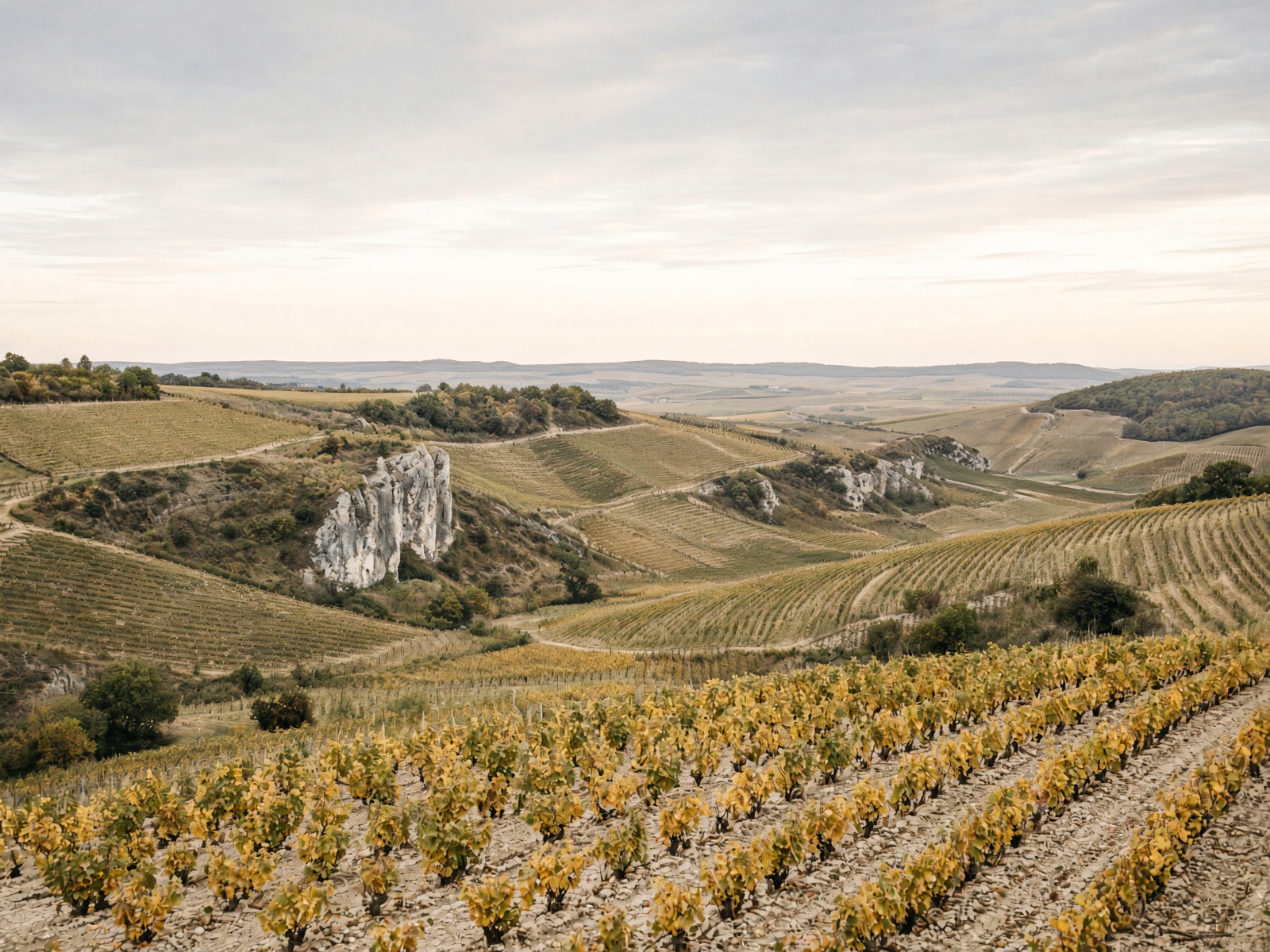
Cool climates, early picks, and volcanic or limestone soils tend to preserve acid. Malolactic conversion softens it. Acidification in the cellar is legal in many places and a fact of warm-vintage life.
If a wine is 'refreshing,' you are mostly praising acid.