Grape · Germany
Riesling
REES-ling
Acid, perfume, truth
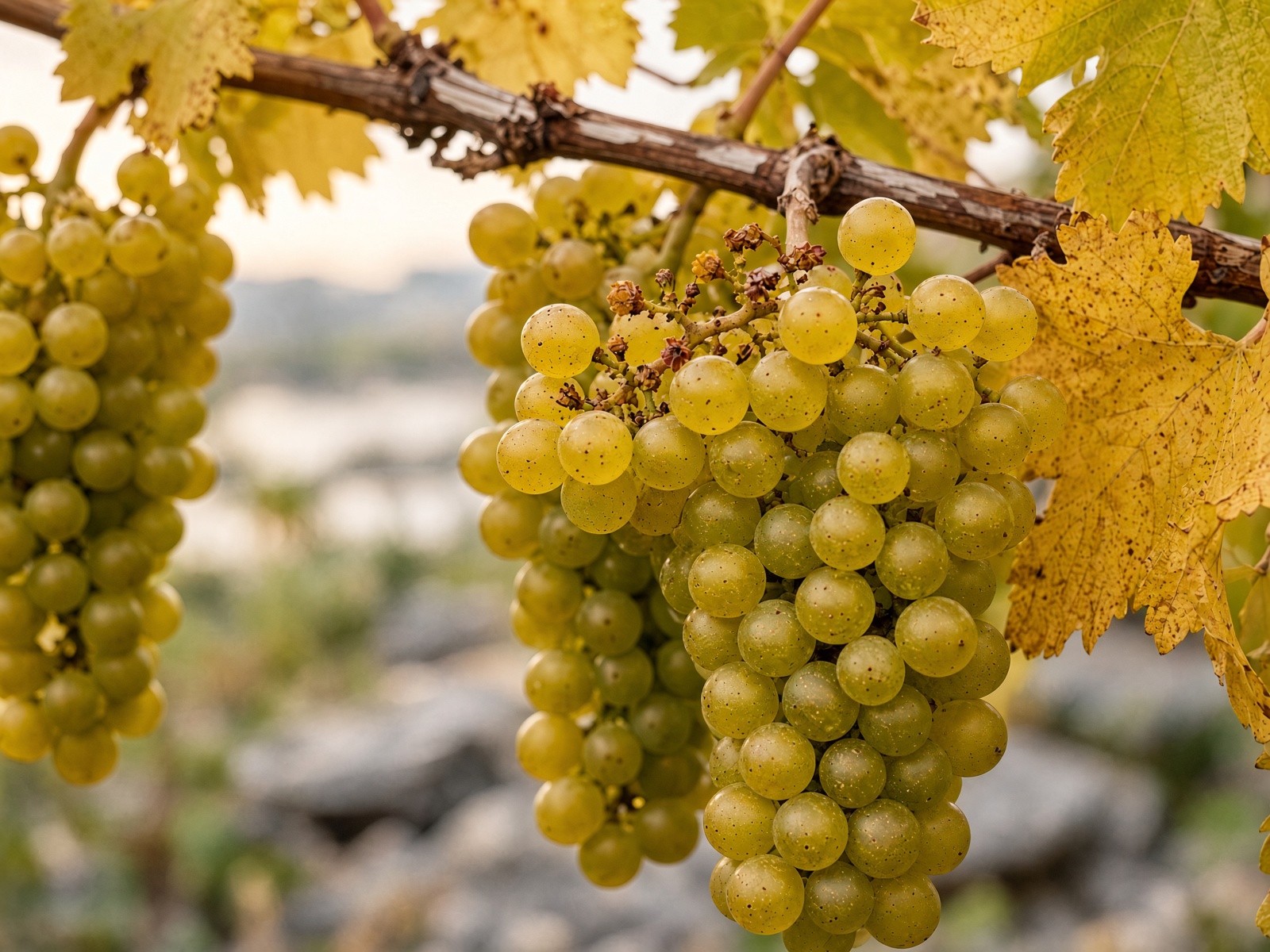
The great white of Germany and Alsace. Riesling is never neutral: lime, petrol, blossom, slate — and acidity that lets it be dry, off-dry, or dessert-sweet without losing shape.
- lime
- green apple
- petrol
- white flowers
- slate
Profile
Ignore the old myth that Riesling is always sweet. Trocken and Grosses Gewächs bottles are bone dry. Kabinett and Spätlese can be feather-light with a gram or two of sugar that makes Thai food and chili sing. Beerenauslese and Trockenbeerenauslese are among the world's longest-lived dessert wines.
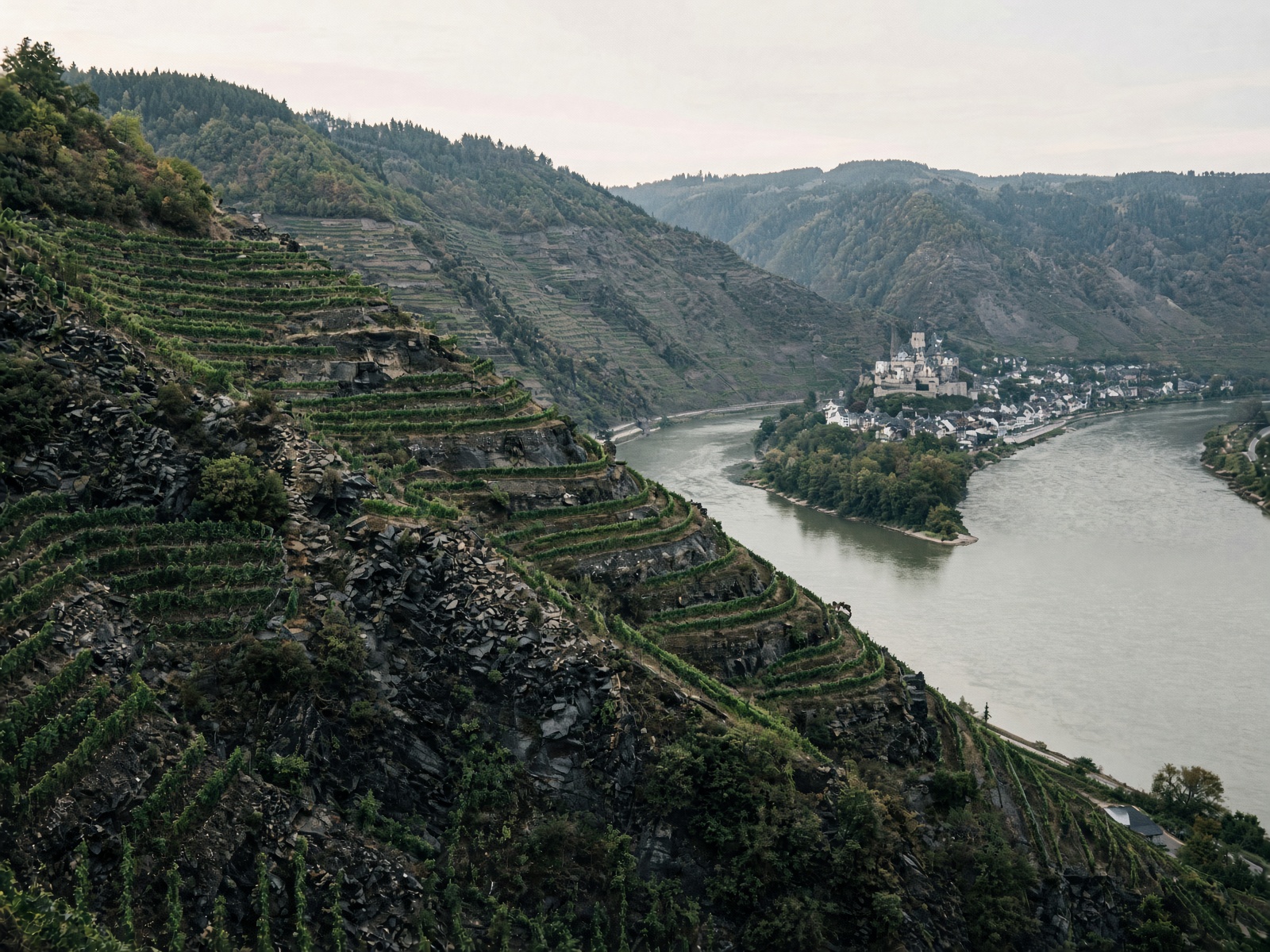
Mosel is weightless and slate-driven; Rheingau richer; Alsace usually dry and fuller; Clare and Eden Valleys in Australia limey and dry. The petrol note is TDN, more common in aged or sun-exposed fruit — a feature, not a fault, when balanced.
Serve cold. Age the good ones. Pair dry Riesling with trout and pork; off-dry with spice; sweet with blue cheese and fruit tarts.
At the table
Service
45–48 °F (7–9 °C). Do not over-chill aged bottles — 48–50 °F (9–10 °C) lets the perfume out.