Style
Rosé
ro-ZAY
Not a grape, a decision
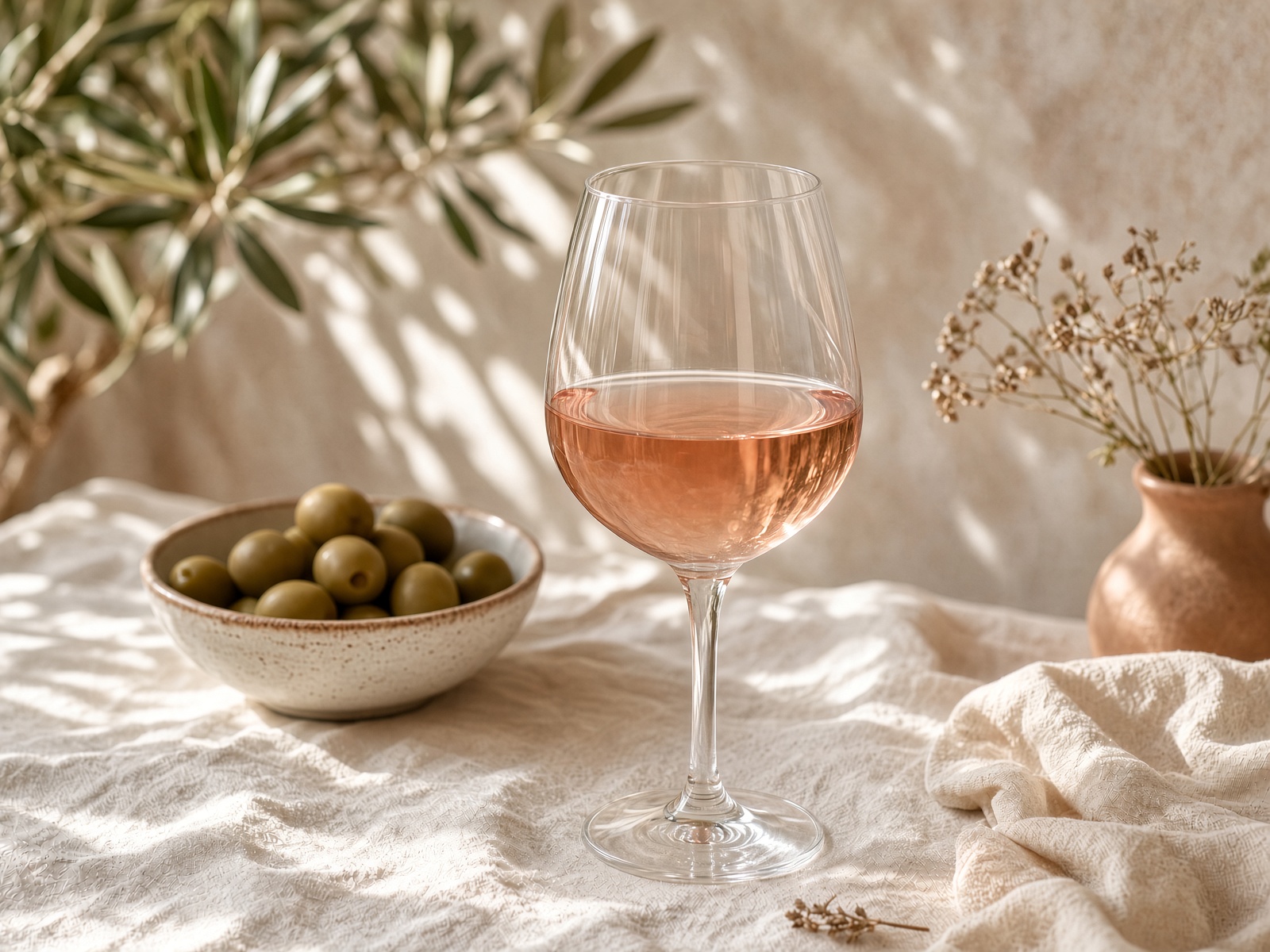
Pink wine made by short skin contact, direct press, or blending (rare, and legal in Champagne). Color is not quality. Dryness and texture are.
- strawberry
- citrus peel
- watermelon
- herbs
- cherry
Direct press (the Provençal method) gives pale color and delicacy. Short maceration gives more structure. Saignée — bleeding juice from a red tank — can make a serious rosé and a more concentrated red. Blending red into white is mostly a Champagne trick.
Darker is not sweeter. White Zinfandel taught that lie. Tavel is dark and dry; many Provençal bottles are pale and dry; White Zin is pale and sweet. Read the palate, not the postcard.
Serve cold. Drink most within a year or two. Bandol, Tavel, and some Spanish rosados can age. Pair with anything you would eat outside.
At the table
Service
45–50 °F (7–10 °C). Serious Bandol rosé 48–52 °F (9–11 °C).